
TOP CUSTOMER REVIEW
Had a space I needed to cover and wasn’t going to spring for a custom door so I purchased several sets of these. They are great. Look great, feel great and well made. They really look nice hanging.
– Coby W.
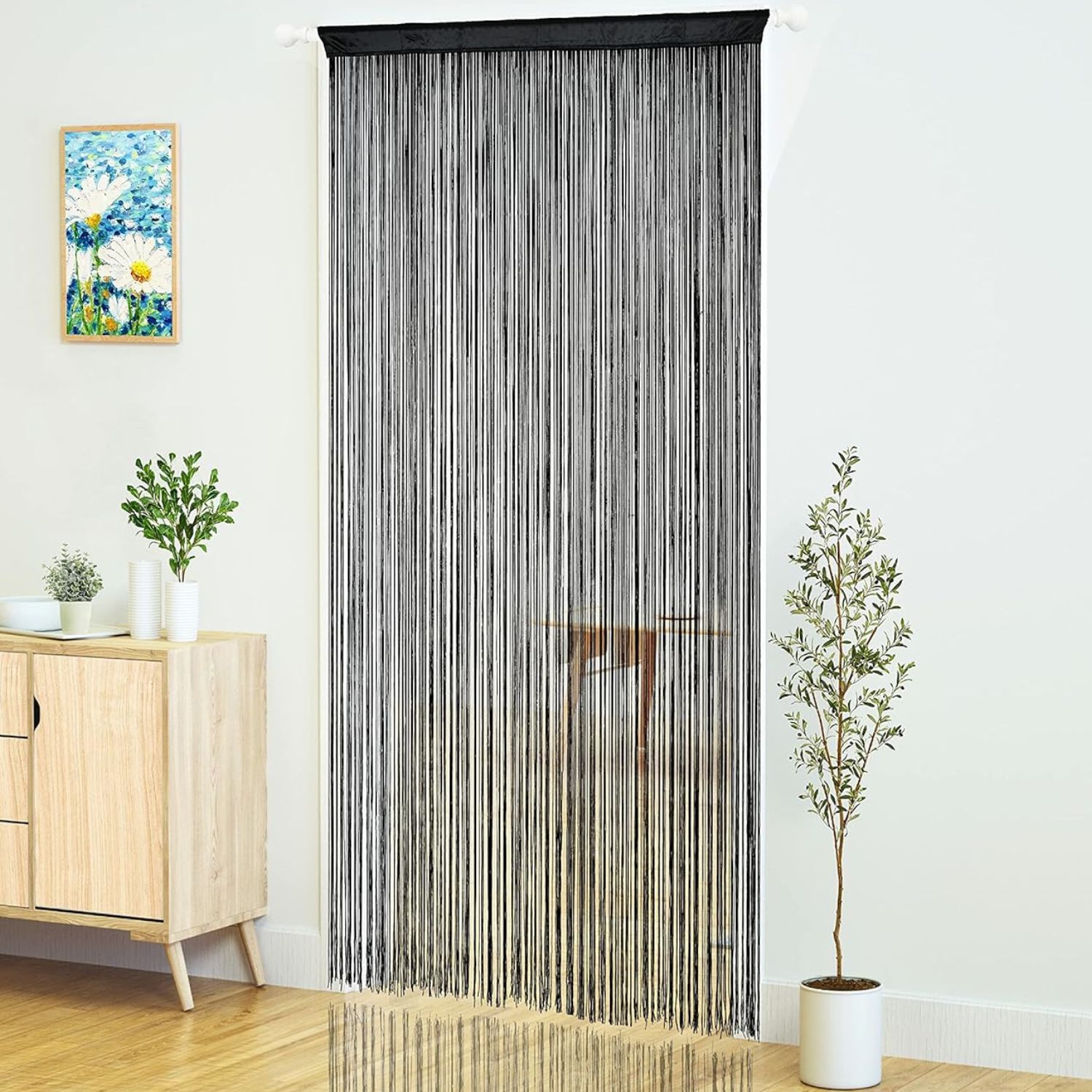
Door Curtain | String Curtain Door | Door Fly Curtain
Premium quality string curtain door – Quick & easy to self install, no tools or tradesman required
Original price was: R1,200.R1,100Current price is: R1,100.
FREE FAST DELIVERY ACROSS SOUTH AFRICA ON ALL ORDERS R750+ or more (save R300)
The string curtain is made from eco-friendly polyester fiber. No harmful substances produced under sunlight. Perfect for Door, Windows, Wedding, Coffee House, Home, Office, Reception Room, or Hotel.
SPECIFICATIONS
- Weight: 590gms | 20oz
- Density: 15 Strings per Inch
- Material: 100% Polyester
- Rod Pocket: Suitable for all kinds of rods. (rods NOT included)


DUE TO CURRENT DEMAND PLEASE ALLOW 5-7 DAYS DELIVERY
Direct To Your Door - All Across South Africa
Original price was: R1,200.R1,100Current price is: R1,100.
MATERIAL & HEALTH
SIZE & WEIGHT
INSTALLATION
-
WHICH PAYMENT METHODS ARE ACCEPTED?
We currently only accept credit card payments, PayPal & Crypto currency. More payment methods will be added in the future.
-
WHAT CURRENCY ARE THE PRICES DISPLAYED IN?
All of our prices are displayed in South African Rand
-
WHAT ARE YOUR DELIVERY OPTIONS AND HOW LONG WILL IT TAKE?
- SOUTH AFRICA: Free Delivery, 5-7 days
OUR DELIVERY PARTNERS INCLUDE

-
DO I GET A RECEIPT FOR MY ORDER?
You will be sent a receipt for your order by email after payment is made. You will also receive a confirmation email with a tracking number once your item has been shipped.
-
DO YOU HAVE A SHOP LOCATION?
We are a “online supplier”, with no physical shop or premises. In this way, we are able to pass our considerable savings directly to you.
-
DO YOUR PRODUCTS COME WITH WARRANTY?
Unless otherwise stated all items purchased come with a standard consumer warranty.
-
CAN I RETURN MY ITEM?
We will gladly Refund or Exchange an item if:
- The item is faulty
- The item is not the same as the description or as shown or advertised
- The item does not perform as per the manufacturers intention
You may not be entitled to a Refund or Exchange if:
- You have changed your mind and no longer require the item
- You decide you cannot afford the item
- You found the item cheaper elsewhere
- The style, colour, or size is not suitable
- You were responsible for the fault
- All refund requests MUST be accompanied with an original receipt or other proof of purchase.
- Please feel free to discuss our policy with our Manager prior to purchase.
Note that measurements quoted on our website and affiliated sites and social media channels are subject to slight variances, when purchasing items measure all items to ensure they fit your space.
-
HOW DO I KNOW IF MY ORDER HAS BEEN SHIPPED?
Once your order is shipped, it will be marked as complete in our database and you will receive a confirmation email with a tracking number.
-
I HAVEN'T RECEIVED MY ORDER YET! IS IT LOST?
If you have any concerns with your order, please contact our support team by email and they will be glad to assist you. Most emails are answered within 1 business day.
Support Team: admin@customersupport.care
-
1
String Curtain Doors: Elevate Your Space with Elegance and Functionality
String curtain doors, also known as door curtains or door fly curtains, are a versatile and stylish addition to any home or office. In this blog post, we’ll delve into the world of string curtain doors, exploring their benefits, design options, and how they can enhance your space’s aesthetics and functionality.
1. The Beauty of String Curtain Doors
String curtain doors are more than just a practical way to keep insects at bay or separate spaces. They offer an elegant and airy look, creating a beautiful, flowing effect in any room.
2. Why Use Door Curtains?
a. Practical Functionality: These curtains act as effective door fly curtains, keeping pesky insects outside while allowing fresh air to circulate indoors.
b. Stylish Design: String curtain doors come in a variety of designs, colors, and materials, making it easy to find one that complements your decor.
c. Space Separation: String curtains can serve as room dividers, creating distinct spaces in open floor plans while maintaining an open and airy feel.
d. Light and Air: Enjoy natural light and airflow without compromising privacy.
3. Styles and Designs of Door Fly Curtains
String curtain doors offer numerous design options to match your interior decor:
a. Beaded String Curtains: These feature strings of beads that create a shimmering effect as they catch the light.
b. Tassel String Curtains: Tassel-adorned string curtains add a touch of bohemian charm to your space.
c. Plain String Curtains: Simple and elegant, plain string curtains provide a clean and modern look.
4. Where to Use String Curtain Doors
a. Entryways: Use string curtain doors at the main entrance to keep insects out while adding a touch of elegance.
b. Patios and Porches: Create a seamless transition between your indoor and outdoor spaces.
c. Interior Room Dividers: Use string curtains to separate areas in large rooms, such as living and dining spaces.
d. Closet Doors: Add a unique touch to your closet or wardrobe.
5. Caring for Your String Curtain Door
Maintaining your string curtain door is easy:
a. Regular Dusting: Use a soft brush or duster to remove dust and debris.
b. Gentle Cleaning: If cleaning is required, hand wash or use a delicate cycle in a washing machine. Hang to dry.
6. Conclusion: Elevate Your Space
String curtain doors are more than just practical solutions for doorways; they’re a stylish addition to your decor that enhances both the aesthetics and functionality of your space. Whether you’re looking to keep insects out, create a room divider, or add a touch of elegance, string curtain doors have you covered. Welcome beauty and function into your home with these versatile and captivating curtains.
Door Curtain: Your Complete Guide to String Curtain Doors and Door Fly Curtains
A door curtain is one of those deceptively simple home additions that delivers far more value than its modest appearance suggests. Hanging in a doorway, it serves as a barrier against flying insects, a divider between rooms, a decorative accent, and a draught reducer all at once. From the classic string curtain door that has been a staple of warm-weather living for generations to modern door fly curtains engineered with advanced materials, the options available today cover every taste, need, and setting imaginable.
Whether you are looking to keep flies out of your kitchen during summer, add a touch of bohemian style to a living space, or create a soft partition between indoor and outdoor areas, a well-chosen door curtain transforms a plain opening into something both functional and attractive. This guide covers everything from material choices and hanging methods to maintenance and creative uses so you can find the perfect door curtain for your home.
What Is a Door Curtain and How Is It Used?
A door curtain is any hanging fabric, beaded strand, mesh panel, or string arrangement designed to cover a doorway while still allowing easy passage through the opening. Unlike a solid door, a door curtain provides a soft barrier that people can walk through by parting the strands or pushing the fabric aside, and it falls back into place naturally behind them. This simple mechanism makes door curtains ideal for high-traffic openings where a swinging door would be impractical or unnecessary.
Door curtains are used in homes, restaurants, shops, market stalls, and commercial kitchens around the world. Their applications range from purely decorative room dividers to highly functional insect barriers that keep flies, mosquitoes, and wasps out of food preparation areas. The versatility of the door curtain concept means there is a style and material suited to virtually every doorway and every purpose.
A Brief History of the Door Curtain
Hanging barriers in doorways is a practice that stretches back thousands of years. Ancient civilisations used beaded curtains, woven reed panels, and fabric drapes to manage airflow, control light, and define spaces within their homes. The string curtain door as we recognise it today became popular in Mediterranean and tropical regions where warm climates demanded constant ventilation but insect pressure made open doorways impractical. Strands of beads, shells, bamboo, and eventually synthetic materials provided the ideal compromise, allowing air to circulate freely while creating enough of a visual and physical barrier to deter flying insects from entering.
Over time, the door curtain evolved from a purely utilitarian object into a design element in its own right. The beaded curtains of the 1960s and 1970s became iconic symbols of bohemian and counterculture interiors, while modern iterations in sleek materials and neutral tones have found their way into contemporary minimalist homes. Today the door curtain occupies a unique space where practical function and personal style intersect.
Types of Door Curtains
The door curtain market offers a remarkable variety of styles, materials, and configurations. Understanding the main types helps you narrow down the options and choose a curtain that matches both your functional requirements and your aesthetic preferences.
String Curtain Doors
A string curtain door consists of dozens or even hundreds of individual cords or threads hanging vertically from a top rail or header. The strings hang freely, creating a dense but passable barrier across the doorway. Walking through a string curtain door is effortless because the individual strings part easily around your body and settle back into position behind you with no effort on your part.
String curtain doors are available in a wide range of materials including cotton, polyester, nylon, and blended synthetic fibres. They come in solid colours, graduated colour patterns, metallic finishes, and even glow-in-the-dark options. The visual effect of a string curtain door ranges from casual and relaxed to surprisingly elegant, depending on the material and colour you choose. Thin, densely packed strings in a dark neutral colour create a sophisticated look, while thick, brightly coloured cords bring energy and personality to a space.
Beaded Door Curtains
Beaded door curtains use strands of beads rather than continuous strings to create the hanging barrier. The beads may be made from wood, bamboo, plastic, glass, crystal, metal, or shell, and they can be uniform in size and colour or arranged in decorative patterns that form images, geometric designs, or abstract gradients. The weight of the beads helps the strands hang straight and return to position quickly after someone passes through.
Beaded curtains produce a distinctive clicking or rustling sound when disturbed, which many people find pleasant and which also serves as an informal notification that someone has entered or exited through the doorway. This auditory quality makes beaded door curtains a popular choice for shop entrances and commercial spaces where staff benefit from hearing customer movement.
Door Fly Curtains
A door fly curtain is designed specifically to prevent flying insects from entering through an open doorway. While all door curtains provide some degree of insect deterrence, a dedicated door fly curtain optimises this function through denser strand spacing, heavier materials that resist being blown aside by wind, and sometimes integrated insect-repelling treatments applied to the curtain material.
Door fly curtains are commonly used in kitchens, dining areas, back doors that open onto gardens, and any entrance that needs to remain open for ventilation or foot traffic while keeping flies, mosquitoes, and other pests on the outside. The most effective door fly curtains use overlapping strands that create multiple layers of coverage, ensuring that insects cannot navigate through the gaps between individual cords. This overlapping design is the key feature that distinguishes a purpose-built fly curtain from a decorative string curtain that happens to offer some incidental insect protection.
Chain Link Door Curtains
Chain link door curtains use strands of interlocking metal or heavy-duty plastic links instead of strings or beads. The weight of the chains makes these curtains exceptionally stable in windy conditions and highly effective as fly barriers because the heavy strands resist being pushed aside by gusts that would blow lighter curtains open. Chain link curtains are popular in commercial and industrial settings such as restaurant kitchens, warehouse entrances, and food processing areas where robust insect control is essential. In residential settings, they suit back doors and utility entrances where function takes priority over decoration.
Bamboo and Wooden Bead Door Curtains
Bamboo and wooden bead door curtains bring natural warmth and organic texture to a doorway. The strands are typically made from short sections of bamboo tube or carved wooden beads threaded onto nylon or cotton cord. These curtains create a relaxed, earthy atmosphere that complements natural and rustic interior styles. Bamboo curtains provide moderate insect deterrence due to their weight and density, and they perform well as room dividers and decorative features. They do require more care than synthetic alternatives, as natural materials are susceptible to moisture damage and splitting if not maintained properly.
How a Door Fly Curtain Keeps Insects Out
The effectiveness of a door fly curtain as an insect barrier depends on several design features working together. Understanding these features helps you choose a curtain that genuinely keeps flies and mosquitoes at bay rather than one that merely looks the part.
Strand Density and Overlap
The single most important factor in a door fly curtain’s insect-blocking ability is the density and overlap of its strands. A curtain with sparse, widely spaced strands may look attractive but leaves gaps large enough for insects to pass through easily. An effective fly curtain uses strands spaced closely enough that they touch or overlap their neighbours when hanging at rest. This creates a continuous barrier with no direct sightline through the curtain for insects to follow.
Many quality door fly curtains use a double-layer design where two rows of strands are offset from each other, so the gaps in the front row are covered by strands in the back row. This staggered arrangement makes it nearly impossible for flying insects to navigate through the curtain without contacting a strand, which is usually enough to deter them and send them searching for an easier entry point elsewhere.
Weight and Stability
A door fly curtain needs enough weight to hang straight and resist being blown open by passing breezes. Lightweight string curtains can flutter and separate in even mild wind, temporarily opening gaps that insects exploit. Heavier materials such as PVC, weighted polyester, and chain link maintain their position far more reliably. Some door fly curtains incorporate small weights at the bottom of each strand or attach to a lower rail that holds the strands in a fixed position, further reducing the chance of wind-induced gaps.
Colour and Visual Deterrence
Research into insect behaviour has shown that certain colours are more effective at deterring flies than others. Many commercial door fly curtains use specific colour combinations that take advantage of this knowledge. Multi-coloured strands in contrasting patterns can create a visual confusion effect that discourages flies from attempting to fly through the curtain. Darker colours tend to be less attractive to flies than light or white surfaces, which is one reason many purpose-built fly curtains use dark-toned strands. While colour alone is not enough to create an effective insect barrier, it adds a supplementary layer of deterrence that complements the physical blocking of the strands.
Choosing the Right Door Curtain for Your Space
Selecting the ideal door curtain involves balancing practical needs with aesthetic preferences. The right choice for a busy kitchen back door will differ significantly from the right choice for a decorative archway between living areas.
Consider the Primary Purpose
Start by identifying what you need the door curtain to do. If insect control is your main objective, prioritise a purpose-built door fly curtain with dense, overlapping strands and sufficient weight to resist wind. If you are looking primarily for a decorative room divider or a way to add visual interest to a plain doorway, a string curtain door or beaded curtain in a style that matches your interior design will serve you better. If you want both function and style, look for door fly curtains that combine effective insect-blocking design with attractive colours and finishes.
Match the Curtain to the Doorway Size
Door curtains are available in a range of widths and heights to suit different openings. Measure the width of your doorway at the point where the curtain will hang and the height from the hanging point to the floor or threshold. For effective insect control, the curtain should be wide enough to cover the entire opening without gaps at the sides, and long enough to reach within a centimetre or two of the floor so insects cannot slip underneath. For purely decorative applications, the curtain can be slightly shorter without compromising its visual impact.
Most standard door curtains are designed for openings approximately 90 centimetres wide and 200 to 210 centimetres tall. For wider doorways, double-wide curtains or two standard curtains hung side by side provide full coverage. For non-standard heights, many string and beaded curtains can be trimmed from the bottom to achieve the perfect length.
Think About Traffic Volume
Doorways with heavy foot traffic need curtains that can withstand constant parting and closing without tangling, wearing, or losing strands. String curtain doors made from durable synthetic materials handle high traffic well because the individual strings are flexible, resistant to breakage, and return to their resting position quickly after being displaced. Beaded curtains, while attractive, can be more prone to tangling and breakage in very busy doorways, particularly if people pass through quickly or carry items that catch on the strands. For the busiest openings, PVC strip curtains or chain link door curtains offer the greatest durability and lowest maintenance.
Households with Children and Pets
If children or pets will be passing through the curtain regularly, safety and durability become primary considerations. Avoid beaded curtains with small components that could detach and pose a choking hazard for young children. String curtain doors are generally safer because the strands are continuous and firmly attached at the top. For households with pets, heavier curtain materials that hang straight and resist being pulled or chewed offer better longevity. Door fly curtains made from PVC or weighted polyester are particularly well suited to family and pet-friendly homes because they are tough enough to handle rough treatment and easy to clean when dirty paws or sticky fingers leave their mark.
How to Hang a Door Curtain
Hanging a door curtain is a straightforward task that most people can complete in under fifteen minutes with basic tools. The installation method varies slightly depending on the curtain style and the type of doorway, but the fundamentals are consistent.
Curtain Rail and Track Systems
Many door curtains come with a mounting rail or track that attaches to the top of the doorframe. The rail typically has pre-drilled holes for screwing directly into the frame header, and the curtain strands are either permanently attached to the rail or clip onto it with hooks or rings. This is the most secure mounting method and is recommended for heavy curtains, high-traffic doorways, and any installation where the curtain needs to stay firmly in place over a long period.
For renters or anyone who prefers a non-permanent installation, tension rods offer an alternative that requires no screws or drilling. A tension rod fits inside the doorframe and is tightened to wedge itself securely between the two side jambs. Lightweight string curtains and some beaded curtains can be hung from a tension rod using rings or tie-on loops. This method works well for light to medium-weight curtains but may not support the weight of heavier chain link or PVC fly curtains.
Adhesive and Hook-Based Mounting
Adhesive hooks and magnetic mounting systems provide another tool-free installation option for lightweight door curtains. Self-adhesive hooks rated for the weight of the curtain are attached to the doorframe at appropriate intervals, and the curtain header is hung from these hooks. This method is best suited to very light string curtains and decorative curtains where the primary purpose is visual rather than functional insect control. For heavier curtains or applications where a strong, reliable hold is essential, screw-mounted rails remain the best option.
Getting the Height Right
The correct hanging height depends on the curtain’s purpose. For insect control, hang the curtain so that the bottom of the strands sit as close to the floor or threshold as possible without dragging on the ground. A gap of five to ten millimetres is ideal, allowing the curtain to swing freely when someone passes through without leaving enough space for insects to crawl underneath. For decorative applications, the strands can hang slightly higher for a more casual, relaxed appearance. Some string curtain doors look particularly striking when hung so the bottom ends just brush the floor, creating a pooling effect that adds a sense of luxury and drama to the doorway.
Maintaining and Cleaning Your Door Curtain
Regular maintenance keeps your door curtain looking fresh and functioning effectively. The cleaning method depends on the material, but all door curtains benefit from periodic attention.
Cleaning String and Fabric Door Curtains
Most string curtain doors made from synthetic materials can be machine washed on a gentle cycle inside a mesh laundry bag to prevent tangling. Use a mild detergent and cold or lukewarm water, and hang the curtain to air dry rather than using a tumble dryer, which can cause shrinkage or heat damage to synthetic fibres. For cotton string curtains, check the manufacturer’s care instructions, as some cotton curtains may shrink or lose colour in the wash. Between full washes, a quick vacuum with a soft brush attachment removes surface dust and keeps the strands looking clean.
Cleaning Beaded and Bamboo Curtains
Beaded and bamboo door curtains cannot be machine washed and require a more hands-on approach. Wipe each strand with a damp cloth to remove dust and grime, or take the curtain outdoors and spray it gently with a garden hose. For stubborn dirt on wooden or bamboo beads, a mixture of warm water and a few drops of mild soap applied with a soft cloth works well. Allow the curtain to dry thoroughly before rehanging to prevent moisture damage or mould growth on natural materials.
Maintaining Door Fly Curtains
Door fly curtains accumulate dust, pollen, and sometimes residue from insect contact that can make them look grimy over time. PVC and plastic fly curtains are the easiest to clean because you can wipe them down with a damp cloth and an all-purpose cleaner without removing them from the doorway. For a deeper clean, take the curtain down and soak it in warm soapy water for half an hour, then rinse and hang to dry. Weighted polyester fly curtains can usually be washed in a machine following the same gentle-cycle approach used for string curtains. Keeping your door fly curtain clean is not just about appearance. A clean curtain hangs straighter, moves more freely, and returns to its closed position faster after someone passes through, all of which contribute to better insect protection.
Creative Ways to Use Door Curtains in Your Home
While the doorway is the obvious home for a door curtain, creative placement opens up a range of additional uses that add function and personality to your living space.
Room Dividers and Zone Separators
A string curtain door hung from a ceiling-mounted track can divide a large open-plan room into distinct zones without the permanence or cost of a built wall. This is a popular technique in studio apartments where the sleeping area needs some separation from the living space, or in children’s rooms where a visual boundary between play and sleep areas helps establish routine. The curtain provides a sense of division while still allowing light and air to pass freely between the zones, keeping the overall space feeling open and airy.
Wardrobe and Storage Covers
Open wardrobes, pantries, and storage alcoves look tidier when concealed behind a door curtain. A string or beaded curtain covers the contents from view while allowing instant access without the need to open and close a door. This approach works especially well in bedrooms where a curtain can soften the look of an open closet and add a decorative element to the room at the same time.
Outdoor Entertaining Areas
Door fly curtains hung around the perimeter of a covered patio, gazebo, or outdoor dining area create an insect barrier that lets guests enjoy the outdoors without being bothered by flies and mosquitoes. The curtains allow breezes to pass through while maintaining a perimeter that discourages insects from entering the sheltered space. For evening entertaining, string curtain doors with integrated fairy lights or metallic strands create a stunning visual effect that transforms an ordinary outdoor area into something truly special.
Behind Exterior Screen Doors
Hanging a door fly curtain behind an existing screen door adds a secondary layer of insect protection that is particularly useful in areas with heavy insect pressure. When the screen door is opened for passage, the fly curtain maintains the barrier until the door closes again. This double-layer approach significantly reduces the number of insects that manage to enter during the brief moments the screen door is open, making it a practical upgrade for anyone who finds that a single screen door is not quite enough to keep their home bug-free.
Selecting the Best Material for Longevity
The lifespan of your door curtain depends heavily on the material you choose and the conditions it will face. Curtains hung in sheltered indoor doorways will last far longer than those exposed to direct sunlight, rain, and wind in an outdoor setting.
Synthetic Materials for Maximum Durability
Polyester, nylon, and PVC are the most durable materials for door curtains that see heavy daily use or outdoor exposure. These synthetics resist UV degradation, moisture, mould, and mildew far better than natural fibres. They maintain their colour and structural integrity through multiple seasons and can be cleaned easily without special treatment. For a door fly curtain that will hang in an exterior doorway year-round, synthetic materials offer the best combination of performance and longevity.
Natural Materials for Indoor Charm
Cotton, bamboo, wood, and shell create beautiful door curtains with textures and character that synthetic materials struggle to replicate. These natural options are best suited to indoor use where they are protected from the elements. In a sheltered doorway away from direct sunlight and moisture, a bamboo or wooden bead curtain can last for many years and develop a warm patina that enhances its appearance over time. Natural materials do require more attentive care, including occasional oiling for bamboo and wood, and careful drying after any exposure to moisture.
Why a Door Curtain Deserves a Place in Your Home
Few home accessories deliver as much practical value and visual impact for so little effort and investment as a well-chosen door curtain. A string curtain door adds personality and flow to interior spaces, breaking up sightlines without blocking light or air. A door fly curtain transforms a problem doorway into a functional opening where fresh air circulates freely while insects stay firmly outside. Both serve their purpose quietly and reliably, requiring minimal maintenance and no ongoing costs.
The ease of installation means you can experiment with different styles and placements without commitment. If a curtain does not work in one doorway, move it to another in minutes. If your taste changes, swap it for a new style just as easily. This flexibility, combined with genuine functional benefits and an almost limitless range of decorative options, makes the door curtain one of the most versatile and underappreciated additions you can make to your home. Whether your priority is keeping flies out of the kitchen, adding warmth to a hallway, or creating a memorable entrance to your outdoor entertaining area, there is a door curtain perfectly suited to the job.
Only logged in customers who have purchased this product may leave a review.


Reviews
There are no reviews yet.